

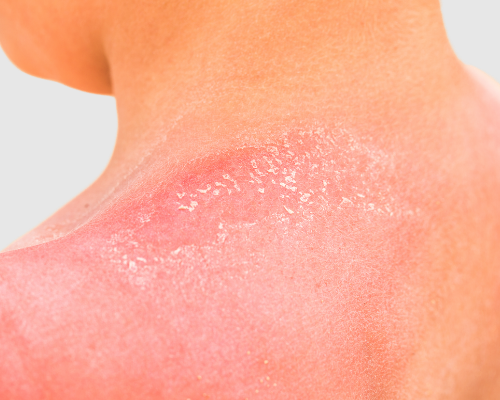
Sun-damaged skin treatment has two parts. First, a GP or dermatologist checks any new spots, changes, or irregularities. Once your skin is cleared, cosmetic options such as Picosure or Excel V+ laser, clinical peels, skin needling and LED can reduce the appearance of pigmentation, texture and redness. Daily SPF 50+ protects the result, but a consultation determines suitability.
What are the Best Sun-Damaged Skin Treatments for Queenslanders?
If you grew up in Queensland, chances are your skin has had more UV than almost anywhere else on earth, and by your 30s or 40s it usually shows. Brown patches across the cheeks. A mottled chest. Rough texture, and redness that never quite settles. Sun-damaged skin treatment is the phrase people search for, and it covers two very different things.
The first is medical, as any new spot, change, bleeding, or irregularity needs a GP or dermatologist, not a skin clinic. The second is cosmetic, and that is where treatments come in: reducing the appearance of pigmentation, uneven texture and redness once your skin has been checked. At Esteem Clinic, that usually means a pigment laser (Picosure Focus Lens or Excel V+), Laser Genesis, a course of clinical peels or skin needling, and Healite II LED to support recovery, in whatever combination a dermal skin and laser therapist decides after looking at your skin. Here is how the damage happens, what each option does, and what to expect.
What does sun damage do to your skin?
Sun damage, or photoageing, is what UV radiation does to skin over years: brown spots and patchy pigment where melanin has been overproduced, broken-down collagen and elastin that show as fine lines and looseness, coarse texture, and dilated capillaries that read as redness. A 2013 clinical study of nearly 300 women put the figure bluntly: UV exposure appears to account for about 80 per cent of visible facial ageing.
Two types of UV do the work. UVB is the burning ray, and it drives the melanin response seen as a tan, freckles and, later, solar lentigines (sun spots). UVA penetrates deeper, passes through clouds and glass, and quietly breaks down the collagen that keeps skin firm. You do not feel either of them, which is why so much damage happens without a single sunburn.
Queensland makes this especially challenging. Cancer Council Queensland notes the UV index sits at 3 or above all year round here, the level at which skin damage occurs, and that on a summer day it can take as little as 10 to 15 minutes to burn. Around 60 per cent of the day’s carcinogenic UV arrives between 10 am and 2 pm, and cloud only cuts UV by about 30 per cent on average.
Get a skin check before any cosmetic treatment
Australia has some of the highest UV levels in the world, and Cancer Council Australia links overexposure to up to 95 per cent of melanomas. Cancer Council Queensland puts skin cancer diagnoses in this state at more than 4,000 people a year.
A skin clinic cannot diagnose skin cancer, and a laser or peel applied over an undiagnosed lesion can lighten it or change its surface, making it harder for a doctor to assess later. So if you have anything new, growing, changing colour, bleeding or refusing to heal, it is important to see your GP or a dermatologist first. If one of our dermal skin and laser practitioners sees something during consultation that needs a medical opinion, they will say so and pause the cosmetic plan until it has been checked.
What treatments help pigmentation, texture and redness?
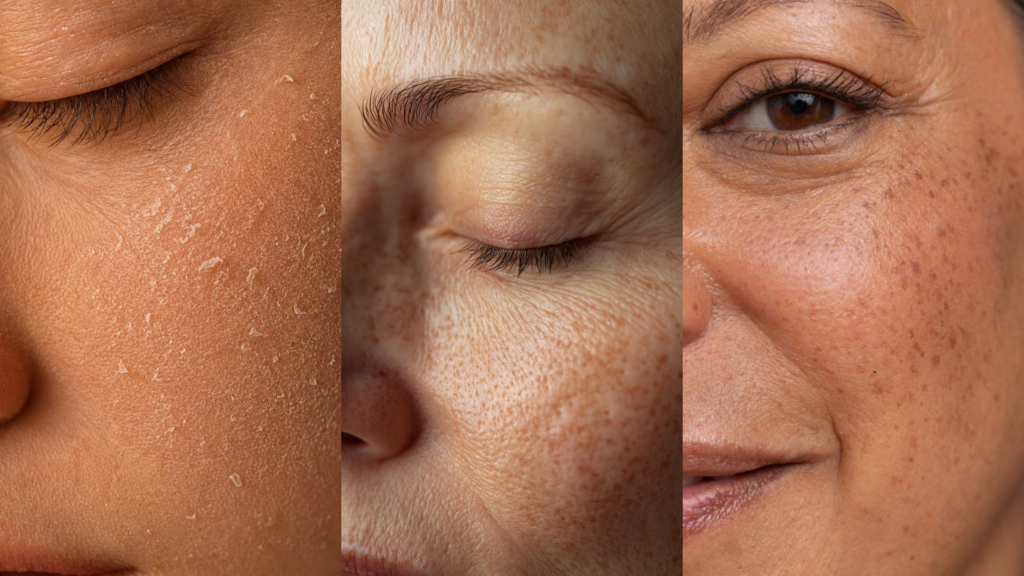
Sun damage is rarely one problem, so the plan is rarely one treatment. The three concerns clients bring in most often:
Pigmentation and sun spots
Picosure Focus Lens is a picosecond laser that delivers very short pulses of energy to fragment pigment while sparing the surrounding skin. It is used on the face, neck, chest and hands for diffuse sun damage and uneven tone, usually as a series with little downtime. Excel V+ targets discrete brown spots and visible vessels. Treated spots typically darken for several days, then flake away. For widespread light mottling, a course of clinical peels lifts surface pigment gradually and is often the gentler and cheaper starting point.
Darker skin types and recently tanned skin carry a higher risk of post-inflammatory pigmentation after heat-based treatments, so your skin and laser dermal therapist may choose gentler settings, a peel instead of a laser, or ask you to let a tan fade first.
Texture, fine lines and firmness
Skin needling creates thousands of controlled micro-channels that prompt the skin to lay down new collagen over the following weeks. It is planned as a course because collagen rebuilds slowly, and it is used for rough texture, fine lines, enlarged pores and mild laxity. Laser Genesis does related work with heat rather than needles, gently warming the upper dermis to stimulate collagen with almost no downtime. Where the skin is dehydrated as well as sun-worn, NCTF Boost delivery supports the cells that make collagen, elastin and hyaluronic acid.
Redness and broken capillaries
Peels and needling do little for redness, because the problem is vascular. Excel V+ is the tool for visible vessels on the nose and cheeks. Laser Genesis suits diffuse, flushing redness and rosacea-prone skin.
Supporting recovery
Healite II LED is low-level light therapy with no heat and no downtime. It is used after lasers, peels and needling to calm the skin and support healing.
Laser or peel for sun damage: which one?
The type of treatment recommended depends on how deep the pigment sits, how it is distributed, and an individual’s skin type. Options include:
- Distinct dark spots on fair skin. A pigment laser (Picosure or Excel V+) is the more direct tool. Peels are an option, but will lighten them slowly.
- Widespread light mottling and rough texture. A course of peels or skin needling usually gives good results, and it treats the texture at the same time.
- Redness alongside the pigment. Skin will need a laser for the vessels. Peels will not reach them.
- Darker or olive skin. Heat-based treatments need more caution because of the pigmentation risk. Peels, needling and conservative picosecond settings are often the lower-risk conversation, and a test patch is common.
- Chest and hands. The skin is thinner and heals more slowly than the face, so settings are gentler, and the series is longer.
In practice, most sun-damaged skin treatment plans combine two of these over three to six months, with LED in between. The consultation and client’s unique skin requirements will decide the order.
How many sessions, and what is the downtime?
Single-visit treatments such as microdermabrasion or hydrabrasion freshen the surface but do not touch deeper pigment. Laser, peel and needling programs are planned as a series spaced weeks apart. The number depends on how much damage there is and how your skin responds to the first session, and your written plan states it before you start.
Downtime ranges from a few hours of pinkness (Laser Genesis, LED, light peels) to several days of redness, tightness and flaking (skin needling, medium-depth peels, Excel V+ on spots). Pigment often looks darker for a week or so before it lifts. That is typical for the treatment, so we encourage clients to plan sun-damaged skin treatment sessions away from weddings and holidays. It is also important to avoid deliberate sun exposure and tanning for a few weeks either side of treatment; your clinician will give you comprehensive guidance around this.
Protecting the result at home and what skincare can help?
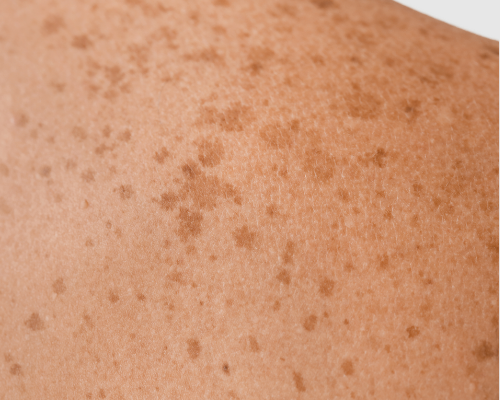
Every treatment above is undone by the same thing that caused the damage in the first place. Cancer Council Australia’s advice is to use sun protection whenever the UV index is 3 or above, which in Brisbane and on the Gold Coast is almost every day of the year. That means a broad-spectrum SPF 50+ sunscreen every morning, reapplied every two hours outdoors, a hat with a real brim, and staying out of direct sun between 10am and 2pm where possible. Sunscreen is the most effective anti-wrinkle skincare there is.
Beyond sun protection, your skin and laser therapist will recommend medical-grade skincare matched to your skin. For sun-damaged skin, a wrinkle-targeting skincare routine usually centres on a few proven ingredients, such as a retinoid at night to support cell turnover and collagen production, a vitamin C serum in the morning for antioxidant protection and pigment control, and a hydrating moisturiser to support the skin barrier between sessions. Your skin and laser therapist will tell you which strengths suit your skin and when to pause them around treatments.
Used consistently, this is the difference between a sun-damaged skin treatment result that holds and one that starts drifting back within a summer.
Frequently Asked Questions
Can sun-damaged skin be repaired?
Visible signs can be reduced through the use of lasers, peels and skin needling can lighten pigmentation, soften texture and reduce redness, with results building over a series of sessions. What no sun-damaged skin treatment does is undo the DNA damage that UV has already caused, so your skin cancer risk does not change, and regular GP skin checks remain vitally important. It is also important to remember that results vary between people.
Is it too late to treat sun damage in my 50s or 60s?
No. Many of the clients we treat for sun damage at Esteem Clinic are in their 50s, 60s and 70s, because that is when decades of Queensland sun show most. Older skin heals a little more slowly and may need gentler settings or a longer series. At any age, a skin check always comes first.
How soon after a skin check can I book a cosmetic treatment?
If your GP or dermatologist gave you the all-clear with nothing treated, you can book a consultation straight away. If a lesion was frozen, excised or treated with a cream, wait until the area has fully healed and your doctor has given approval for treatment to proceed.
Can I have laser if I have just been to the beach?
Usually not straight away; a recent tan or sunburn raises melanin in the skin, which makes laser energy less predictable and increases the risk of burns and post-inflammatory pigmentation. Most clinicians want tanned skin to settle for a few weeks before laser and will ask about sun exposure at your consultation. A peel or LED may be an option in the meantime.
What is the difference between sun spots and melasma?
Sun spots (solar lentigines) are flat brown spots from cumulative UV exposure, common on the face, chest and hands, and they generally respond well to pigment lasers and peels. Melasma is hormonally driven pigmentation, often symmetrical across the cheeks, forehead or upper lip, that can flare with heat and some lasers. It needs a different, more cautious plan.
