

One of the quickest ways to understand your skin type is to wash your face, wait about an hour with nothing on it, then read the signs. Skin that feels tight is usually dry. Shine across the whole face points to oily skin. An oily T-zone with drier cheeks means combination skin. If everything feels comfortable and balanced, that is normal skin, and skin that stings or reddens easily is sensitive. This short test is the heart of how to know your skin type, and the start of your skin care journey.
Knowing your type matters because it changes what your skin actually needs, all the way from the right cleanser, the right level of moisture, and the right products. Below are the five skin types, two simple home tests, the difference between your skin type and the skin concerns that come and go, and why a professional, personalised approach gets you further than guessing.
The five skin types
Most skincare works off five skin types: normal, dry, oily, combination and sensitive. Each one behaves differently, so the same product can suit one person and irritate another. Here is what sets them apart.
Normal, dry and oily skin
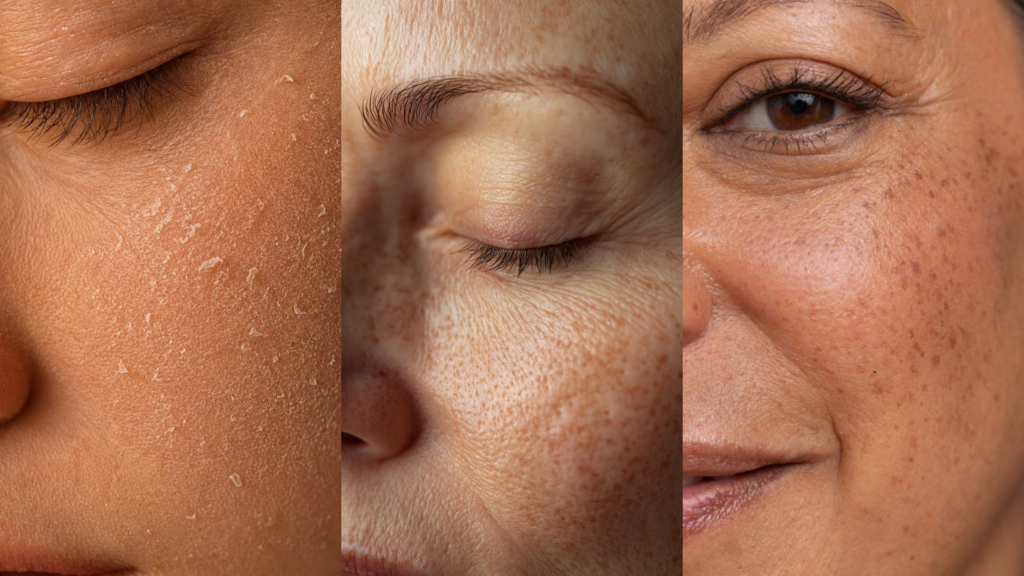
Normal skin sits right in the middle. Oil and moisture are fairly balanced, pores are small to average, and it rarely feels tight or greasy. It is the least demanding type to care for. Dry skin makes less oil than it needs, so it can feel tight, look dull and turn flaky in patches, especially in cold weather. Oily skin runs the other way. The pores are more visible, the face looks shiny within a few hours of cleansing, and breakouts are more common because there is more oil sitting on the surface.
Combination and sensitive skin
Combination skin mixes two behaviours on one face. The T-zone (that strip across the forehead, nose and chin) turns oily, while the cheeks stay normal or dry. It is one of the most common patterns. Sensitive skin is a little different, because it describes how reactive your skin is rather than how much oil it makes. Sensitive skin stings, reddens or itches in response to certain products, fragrances or weather, and any of the other types can be sensitive too.
The traits that set each type apart
Still not sure? Ask yourself these two things:
- How does your skin feel a few hours after cleansing?
- How do your pores and shine look throughout the day?
Dry skin feels tight and looks matte. Oily skin feels slick and looks shiny with larger pores. Normal skin stays comfortable. Combination skin changes depending on the zone. Sensitive skin reacts. Those traits are usually enough to point you toward your skin type before you test anything.
How to test your skin type at home
Two simple home tests answer how to know your skin type, no special equipment required. Both work best on a clean, bare face, ideally an hour after a gentle cleanser and nothing else.
The bare-faced test, step by step
The bare-faced test is the most reliable home method, and it costs nothing. Wash your face with a gentle cleanser, pat it dry, then leave your skin completely bare. No moisturiser, no serum, no makeup. Wait about an hour so your skin settles into its natural state, then look closely in good light.
The blotting paper test
Short on time? Blotting paper gives you a faster read. Press a fresh sheet of blotting paper against your forehead, nose, cheeks and chin, one area at a time, then hold each sheet up to the light. Plenty of oil on every sheet suggests oily skin. Oil from the T-zone only suggests combination skin. Barely any oil on the blotting paper points to dry or normal skin.
Reading your results
Back to the bare-faced test. Run your fingers over your face and pay attention. Tightness or flaking means dry skin. An all-over shine means oily skin. Shine limited to the T-zone with comfortable cheeks means combination skin. Skin that feels calm and balanced is normal, and skin that has flushed or started to itch during the wait is telling you it is sensitive. Whichever test you use, do it on an ordinary day, not straight after a workout or a long flight, so you are reading your true baseline. Looking for reliable skin care products that can help multiple skin types? Please visit our skincare product range.
Skin type versus skin concerns
Your skin type and your skin concerns are not the same thing, and mixing them up is one of the most common skincare mistakes. Your skin type is your baseline: the way your skin behaves most of the time, driven largely by how much oil it produces. A skin concern is a specific issue sitting on top of that baseline, such as dehydration, breakouts, redness or dark spots.
The practical upshot is that you can have two things at once. Oily skin can still be dehydrated, because dehydration is about a lack of water in the skin, not a lack of oil. Dry skin can still break out. Caring for only your type and ignoring the concern, or the other way around, is often why a routine quietly stops working. With clarity on which is which, your skincare choices get a lot clearer.
Remember, you can also be oily and dehydrated at the same time. Oil is about your skin type. Water is about hydration, which is a skin concern. That is why a mattifying routine can leave oily skin feeling tight rather than balanced.
Why your skin type can change
Your skin type is a baseline, not a life sentence. It can shift, sometimes noticeably. Hormones move it around during puberty, pregnancy and menopause. Age tends to nudge skin drier over time as oil production slows. The season matters too, with many people turning oilier through a humid Brisbane or Gold Coast summer and drier across winter.
Stress, sleep, diet, air conditioning and the products you use all play a part as well. That is why it is worth reassessing your skin type once or twice a year, or any time your skin starts behaving differently for more than a few weeks. The bare-faced test only takes an hour, so there is no harm in checking again when the weather turns or your routine changes.
Why a personalised approach matters

What a professional skin analysis adds
A professional skin analysis reads what a mirror cannot. During a skin consultation, a trained professional looks at your skin in detail, asks about your health, lifestyle and current routine, and considers your skin type and your concerns together. This is where the guesswork drops away, and your skin barrier, moisture levels and sensitivities come into focus, so your skincare is matched to your skin rather than to a general type.
A treatment plan built for your skin
From there, the point is a plan built around your skin rather than a generic routine. A personalised, tailored approach means the products, the order you use them and any suitable in-clinic treatment options are chosen to match your skin type, your concerns and your goals. If you have a skin concern that has not settled with a sensible routine, or you are simply not sure where to start, a personalised consultation will point you in the right direction rather than leaving you to guess from a home test.
